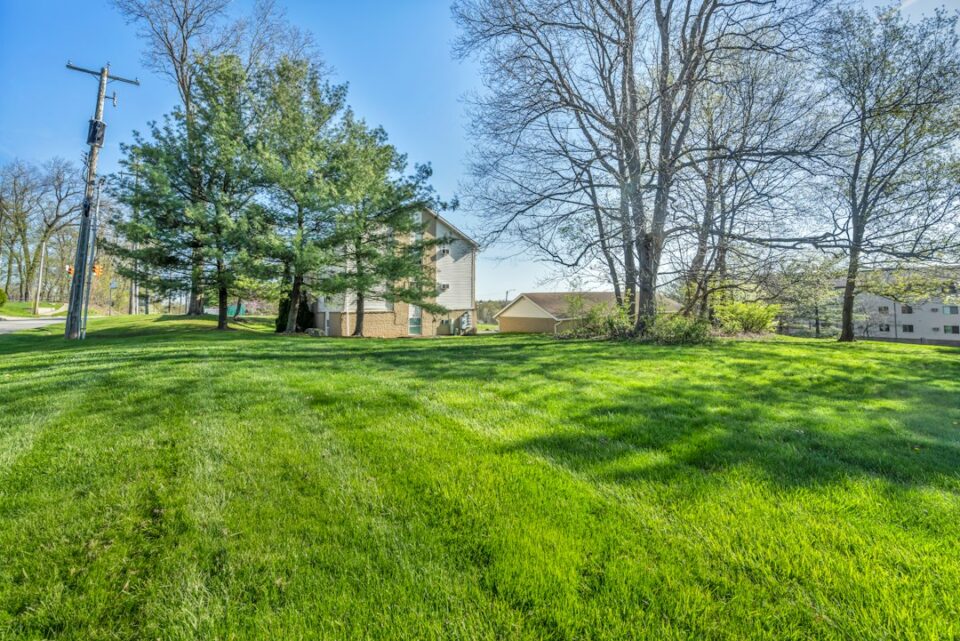
10 10 10 fertilizer for grass can work for new lawns or when a soil test shows low phosphorus and potassium, but it’s usually not ideal for established lawns that mostly need nitrogen. If you do use it, apply about 5 lb of product per 1,000 sq ft (delivers ~0.5 lb N) and water it in, and check local rules because many areas restrict phosphorus on established lawns.
Here’s the quick version: 10-10-10 means 10% nitrogen, 10% phosphate, 10% potash by weight. It’s balanced, which can be helpful during seeding or when a reliable soil test flags low P or K. For day-to-day feeding on mature lawns, a high-nitrogen, low- or zero-phosphorus product is usually a better fit. If you decide on 10-10-10, stick to light rates (around 5 lb per 1,000 sq ft), avoid heavy rain forecasts, and always follow the label.
Is 10-10-10 good for grass? The short answer
In specific situations, yes. For routine feeding, usually not. Ten-ten-ten delivers equal parts of nitrogen (N), phosphate (P₂O₅), and potash (K₂O). Most established lawns primarily respond to nitrogen, while phosphorus and potassium often remain adequate unless a soil test proves otherwise. That’s why many municipalities limit phosphorus on maintained turf: it can accumulate in soil and wash into waterways if misused.
When 10-10-10 helps:
- New seed or fresh sod where early root development and overall establishment benefit from a balanced NPK profile.
- Soils testing low in P and/or K by a credible lab. The lab’s recommendations should guide your product choice and rate.
When it’s not ideal:
- Established lawns with sufficient phosphorus and potassium. These lawns gain more from steady, moderate nitrogen with some slow release.
- Areas with phosphorus restrictions that prohibit P on maintained turf unless you’re seeding or have a documented deficiency.
Quick rate and cost snapshot
- Rate: ~5 lb product per 1,000 sq ft (about 0.5 lb N applied). Going to 10 lb per 1,000 just to hit 1.0 lb N also dumps 1.0 lb P₂O₅ and 1.0 lb K₂O, which is rarely appropriate.
- Cost: Roughly $2–$15 per 1,000 sq ft depending on product type (bulk farm blends at the low end; premium retail granular or liquid concentrates at the higher end).
Regulations: Many states and cities restrict phosphorus on lawns unless you’re establishing new turf or have a qualifying soil test. Check your state extension or municipality website and the product label before applying.
Time to see change: With quick-release nitrogen, you may see greener color in 3–7 days. Over-application, overlap stripes, or a storm right after spreading can undo those gains and increase runoff risk.
Decision aid: Should you use 10-10-10?
| Lawn situation | Grass type | Recommended product ratio | Suggested rate per 1,000 sq ft | Timing window | Notes/legal |
|---|---|---|---|---|---|
| New seed or sod | Cool-season | 10-10-10 or starter (higher P) | ~5 lb (0.5 lb N) | Seeding day or 2–4 weeks after germination | Check P rules; seeding often allowed |
| New seed or sod | Warm-season | 10-10-10 or starter (higher P) | ~5 lb (0.5 lb N) | Late spring to early summer during active growth | Check P rules; seeding often allowed |
| Established lawn, soil test low P/K | Cool-season | 10-10-10 (balanced) | ~5 lb (0.5 lb N) | Early fall or spring light feed | Keep rates modest to reduce runoff risk |
| Established lawn, soil test low P/K | Warm-season | 10-10-10 (balanced) | ~5 lb (0.5 lb N) | Late spring through summer | Don’t apply during dormancy |
| Established lawn, soil test sufficient/high P | Any | High-N, low/zero P (e.g., 24-0-4) | Follow 0.5–0.75 lb N target | Seasonal schedule by grass type | Using P may be restricted; avoid unless seeding |
What 10-10-10 means and how it behaves in a lawn
Those three numbers are the percentage by weight of available nutrients: 10% nitrogen (N), 10% phosphate expressed as P₂O₅, and 10% potash expressed as K₂O. A 40 lb bag of 10-10-10 contains 4 lb of each nutrient, with the rest being filler carriers and conditioners. Nitrogen drives top growth and color. Phosphorus supports early root development. Potassium influences stress tolerance and overall plant function.
Most maintained lawns are nitrogen-driven because mowing repeatedly returns some nutrients via clippings and because soils often already contain sufficient P and K. Over years, extra P and K can accumulate faster than grass uses them. That’s the core reason many regions regulate phosphorus on turf: misapplied P can move off site and contribute to algae blooms. A true starter fertilizer often differs from a 10-10-10 by increasing the P relative to N and K, specifically for seedling roots. Ten-ten-ten is equal parts, not a classic starter, but it still brings P and K, which is why it makes sense only when you have a new lawn or a deficiency confirmed by testing.
Application rates and timing by lawn type
Every fertilizer decision should start with your target nitrogen per application. Lawns commonly do best with 0.5 to 0.75 lb of nitrogen per 1,000 sq ft per feeding, occasionally up to 1.0 lb if the product has slow release and your grass is actively growing. With 10-10-10, those nitrogen targets translate directly into pounds of product because the bag is only 10% N.
| Target N per 1,000 sq ft | Product % N | Pounds of product per 1,000 sq ft | Notes |
|---|---|---|---|
| 0.5 lb N | 10% | 5 lb | Good ceiling for 10-10-10 on established lawns |
| 0.75 lb N | 10% | 7.5 lb | Use only if soil test calls for P/K and label allows |
| 1.0 lb N | 10% | 10 lb | Usually too much P and K; rarely justified |
Cool-season grasses (fescue, ryegrass, Kentucky bluegrass): Focus on fall feedings, with a light spring application if needed. If you’re going to use 10-10-10 for a documented P/K deficiency, keep it modest—~5 lb per 1,000 sq ft—in early fall when turf can use nutrients and temperatures are friendlier.
Warm-season grasses (Bermuda, zoysia, St. Augustine): Target late spring through summer when these species are actively growing. If you’re correcting a deficiency, a single light 10-10-10 feeding after green-up can fit, followed by high-nitrogen, low-P products for the rest of the season.
New seed/sod: If your state allows phosphorus during establishment, a balanced NPK or a classic starter fertilizer is commonly used at or near seeding. Follow the label for newly seeded lawns, and consider splitting the first feeding: a small dose at seeding and another 3–4 weeks after germination. For sod, a light application after rooting begins can help.
Weather timing: Avoid application right before heavy rain. Moisture is helpful after spreading, but a downpour can move nutrients off site. Water in with 0.25–0.5 inches of irrigation unless the label says otherwise.
How to apply 10-10-10: granular and liquid, step by step
Granular 10-10-10 is the most common form for homeowners. It spreads with a broadcast or drop spreader and needs to be watered in. Here’s a simple process:
- Measure your lawn (length × width), subtract hardscape, and round to the nearest 100 sq ft. This prevents over-application.
- Check the label for any special restrictions, especially phosphorus language specific to your state or city.
- Calibrate your spreader. Start on a lower setting and test over a 200–300 sq ft area with a known weight to confirm output.
- Split the passes. Apply half the product north–south, the other half east–west. This evens out distribution and reduces stripes.
- Water in with 0.25–0.5 inches of water soon after spreading unless the label indicates otherwise.
- Clean up. Sweep or blow granules off sidewalks and driveways back onto the turf to reduce runoff and staining.
Liquid 10-10-10 concentrates exist too. They are mixed with water and sprayed evenly over the lawn. Always default to the exact label rate and dilution for lawns. If the label lists a range, stay at the low end for established turf, especially in warm weather. As a math example: if the label says “6 oz concentrate per gallon to cover 1,000 sq ft,” and you need to cover 2,500 sq ft, you’d mix 15 oz concentrate into enough water to spray 2.5 gallons total, applying it evenly across that area. Avoid spraying during the hottest part of the day or during drought stress. Light irrigation after application is common, but follow the label’s specific guidance.
Compatibility and timing: If you used a pre-emergent herbicide or a weed-and-feed, check the interval requirements on both labels before stacking products. Some combinations are fine when spaced a few weeks apart; others should not be mixed or applied together. When in doubt, separate tasks and feed first or later depending on the label sequence.
Edge-guard features on broadcast spreaders and painted buffer lines along hard edges help prevent overspreading into beds and hardscape. They also make it easier to stay legal where phosphorus rules are strict.
10 10 10 fertilizer for grass: better alternatives for routine feeding
For a typical, established lawn, the more efficient approach is to use a high-nitrogen, low- or zero-phosphorus fertilizer. Products labeled in ratios like 24-0-4, 29-0-5, or similar keep nitrogen in focus and avoid unnecessary phosphorus additions. Look for some slow-release nitrogen on the label (often called polymer-coated urea or “water-insoluble nitrogen”). This moderates growth spikes, reduces burn risk, and lengthens the feeding window.
If color is your main concern and your soil test shows adequate macronutrients, an iron supplement or micronutrient pack can deepen green without adding a lot of NPK. In areas with phosphorus restrictions, these options are often encouraged in place of P-containing fertilizers.
If you prefer a low-input approach, consider organic or biosolid-based fertilizers that deliver modest, steady nitrogen while supporting soil biology. For more on that style of lawn care, this guide on why organic products fit lawns and landscaping can be a helpful companion. If you’re designing a simpler yard that needs fewer feedings, you may also like our tips on low-maintenance backyard landscaping and sustainable landscaping for small yards.
Soil testing comes first. A $15–$30 lab test can save far more than that by preventing unneeded nutrients. It also points you to pH corrections (like lime) that make existing nutrients more available, which is often the better first move than adding more P or K.
Costs, products, and availability
Because 10-10-10 is a common agricultural blend, availability is generally good in farm and garden channels. For homeowners, it’s often sold in 40–50 lb bags in-store and as smaller bags or concentrates online. At the ~5 lb per 1,000 sq ft rate, a 40 lb bag covers about 8,000 sq ft. For a 5,000 sq ft lawn, that’s roughly 25 lb of product per feeding.
Cost per 1,000 sq ft varies widely by brand and packaging. Bulk or generic blends can price around the low single digits per 1,000 sq ft at the recommended rate; premium-labeled blends or liquids can land in the low teens per 1,000 sq ft. Liquid concentrates often look expensive per bottle but can be reasonable per 1,000 sq ft once diluted. Compare cost per 1,000 sq ft, not bag price alone, and always verify that the product is turf-appropriate and legal for your region.
What to check on a label before buying:
- NPK percentages, and whether nitrogen includes slow-release fractions
- Explicit turf directions and state compliance statements for phosphorus
- Any temperature or watering guidance that could change timing on your lawn
If you’re adjusting more than feeding—for example, reshaping beds or swapping plantings—browse broader landscaping advice such as landscaping tips for visual impact to align lawn care with the rest of your yard.
FAQs
What is the recommended rate of 10-10-10 fertilizer for a lawn?
A practical ceiling for established lawns is about 5 lb of product per 1,000 sq ft (0.5 lb N). That keeps phosphorus and potassium additions in check. Heavier rates may be justified only with a soil test calling for P/K and a label that permits it, typically during establishment or specific deficiency correction.
Can I just sprinkle fertilizer on top of soil?
For lawns, a spreader gives even distribution, and light watering-in (0.25–0.5 inches) helps move nutrients off leaf blades and into the root zone. Sprinkling by hand causes streaks and hot spots. For bare soil during seeding, follow the label’s incorporation and watering guidance.
What fertilizer numbers are best for lawns?
Most established lawns respond best to higher nitrogen, low- or zero-P products (for example, 24-0-4), with some slow-release nitrogen. Balanced 10-10-10 is better reserved for new lawns or documented deficiencies.
Is 10-10-10 good for Bermuda or cool-season grasses?
It can be used for both, but primarily during establishment or when a soil test identifies low P/K. Bermuda and other warm-season grasses prefer feeding during active growth (late spring through summer). Cool-season lawns benefit most from fall feeding. Either way, 10-10-10 is not the default for routine maintenance.
How do I mix a 10-10-10 liquid concentrate safely for lawns?
Follow the exact label rate. As an example of the math: if the label says “6 oz per gallon per 1,000 sq ft,” and your lawn area is 3,000 sq ft, you’d mix 18 oz in enough water to spray 3 gallons total. Apply evenly, avoid heat stress periods, and rinse equipment thoroughly.
Where can I buy 10-10-10 fertilizer and how much does it cost?
Home centers, farm supply stores, and online retailers commonly stock 10-10-10. Expect roughly $2–$15 per 1,000 sq ft per application depending on whether you choose a budget granular or a premium-labeled granular or liquid. Compare cost per 1,000 sq ft, not just shelf price.
Pre-application checklist
- Soil test checked (recent lab results on P, K, pH)
- Local phosphorus rules checked (state/municipal)
- Lawn size measured correctly
- Spreader calibrated or sprayer set and tested
- Weather: no heavy rain in the 24–48 hour forecast; avoid heat waves
- Irrigation plan ready for 0.25–0.5 inches after application
- Cleanup tools ready: broom or blower for hard surfaces
Used cautiously and for the right reasons, 10-10-10 can play a role in a lawn program. For most established lawns, though, a high-nitrogen product with little or no phosphorus, guided by a simple soil test, is the better long-term pattern—healthier for turf and easier on your wallet.